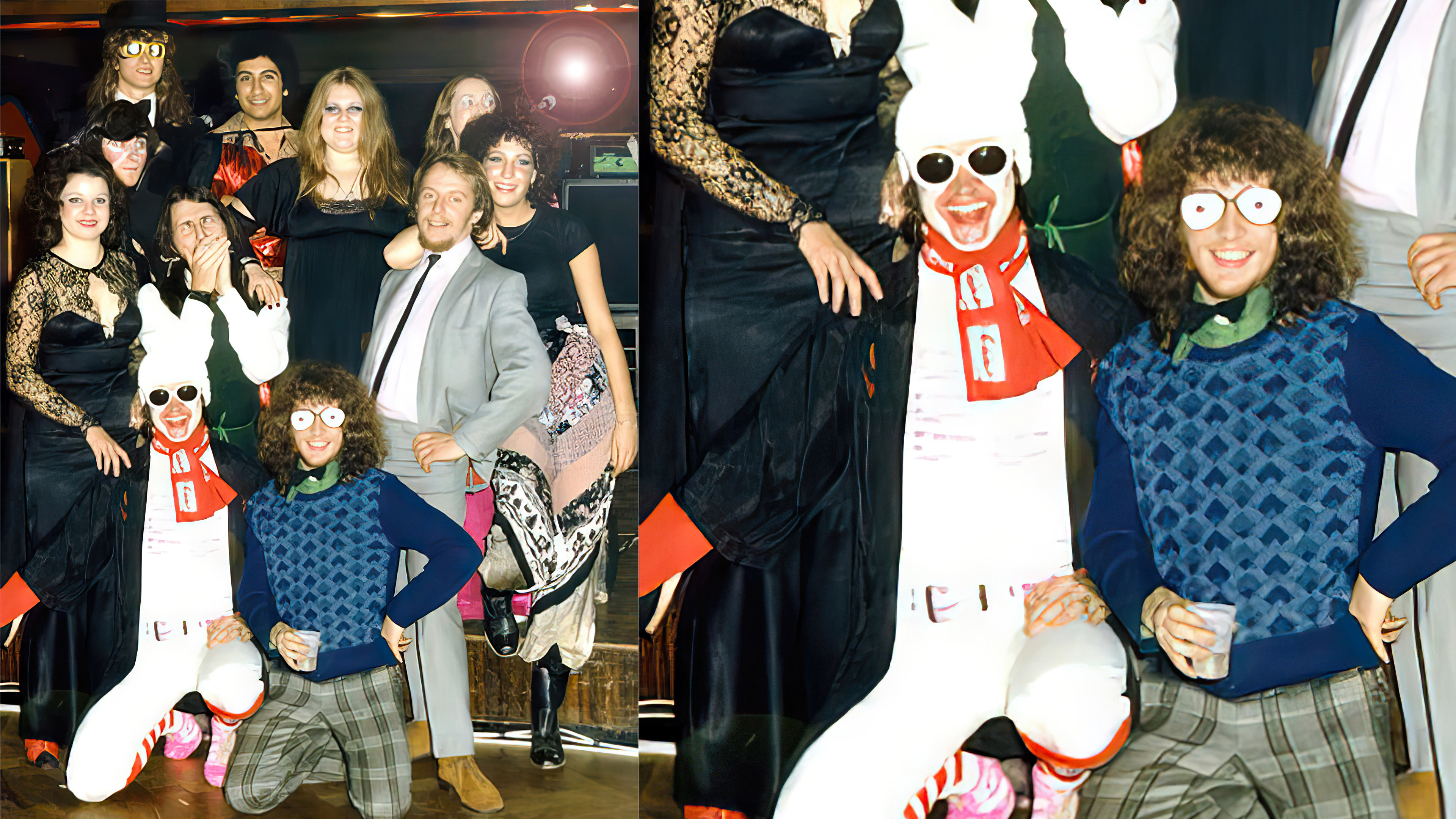
White Rabbit Show — 1975
The first ever student revue at La Trobe University
LUST: A potted history
In the first few years of La Trobe’s existence there was the odd theatre production here and there from companies like Moat Theatre Players and others but very little of note.
Then in 1975, La Trobe University Student Theatre (LUST) was formed with the express purpose of staging annual student revues that would consist solely of self-generated scripted sketch comedy.
The first production was entitled: "The White Rabbit Show", performed at FAST 1975 in Sydney. The cast followed this up in 1976 with the very successful "A Pain in the Arts", which played to packed houses over four nights at La Trobe's Menzies theatre. Company luminaries at that time included Rafik Mankarious, John Considine, Leonie Hurry, Terry Chapman, Martin Edgar, Lloyd Smith, Michelle Fraillon and Dave Armstrong.
Then in 1975, La Trobe University Student Theatre (LUST) was formed with the express purpose of staging annual student revues that would consist solely of self-generated scripted sketch comedy.
The first production was entitled: "The White Rabbit Show", performed at FAST 1975 in Sydney. The cast followed this up in 1976 with the very successful "A Pain in the Arts", which played to packed houses over four nights at La Trobe's Menzies theatre. Company luminaries at that time included Rafik Mankarious, John Considine, Leonie Hurry, Terry Chapman, Martin Edgar, Lloyd Smith, Michelle Fraillon and Dave Armstrong.
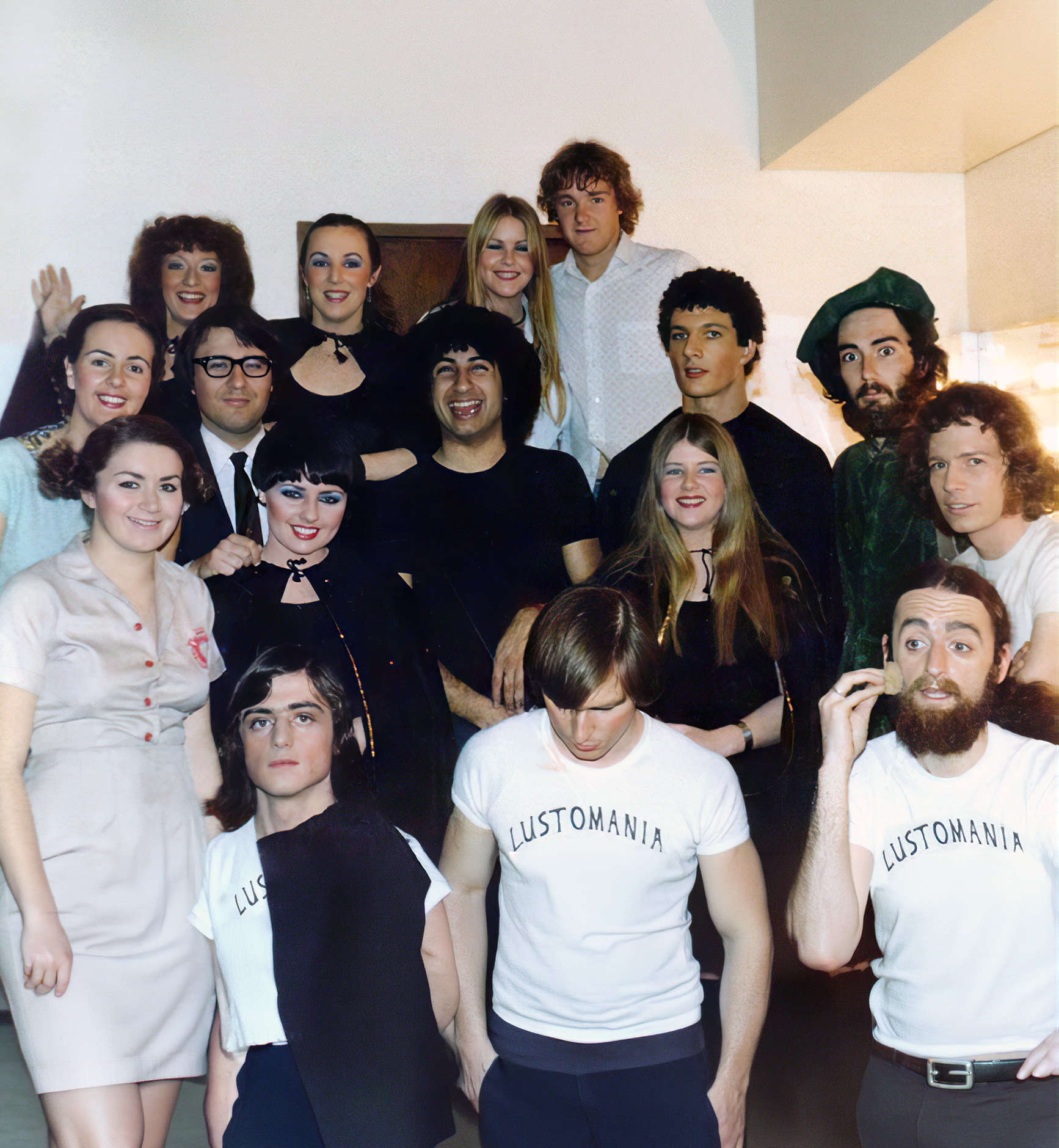
Lustomania revue — 1978
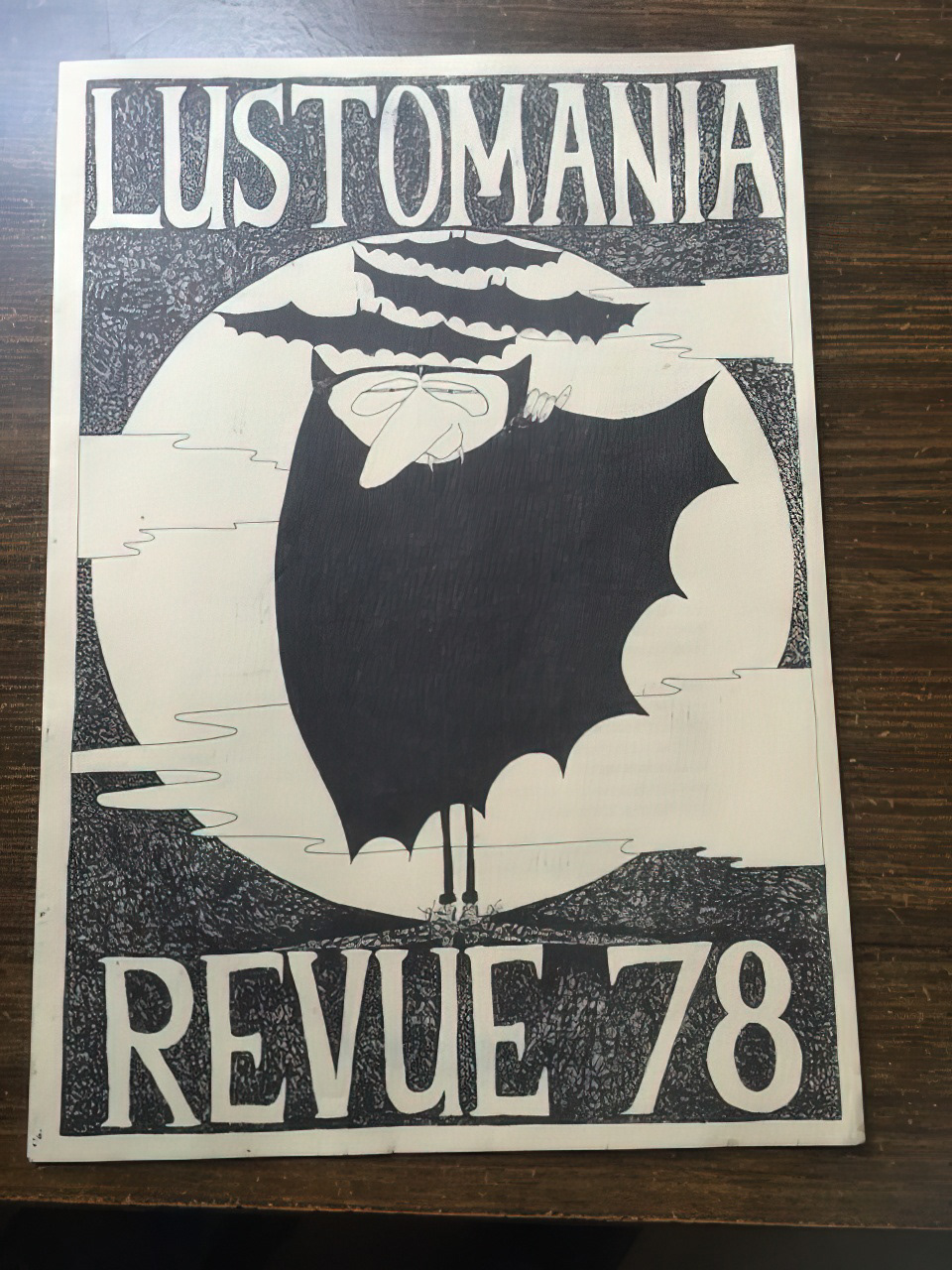
Lustomania program — 1978
LUST performed revues at La Trobe every year from 1975 through to 1980. In addition, LUST also staged several straight plays and theatre performances, including Alex Buzo's innovative "Coralie Landsdown Says No"; several plays designed for children featuring a young Kaye Sutton; and an ancient Greek play staged in La Trobe's Moat theatre directed by Rafik Mankarious. Yet another play, "Tom Cobb", performed at the Menzies theatre, included a young Jim Penman, who later went on to become the founder of "Jim's Mowing".
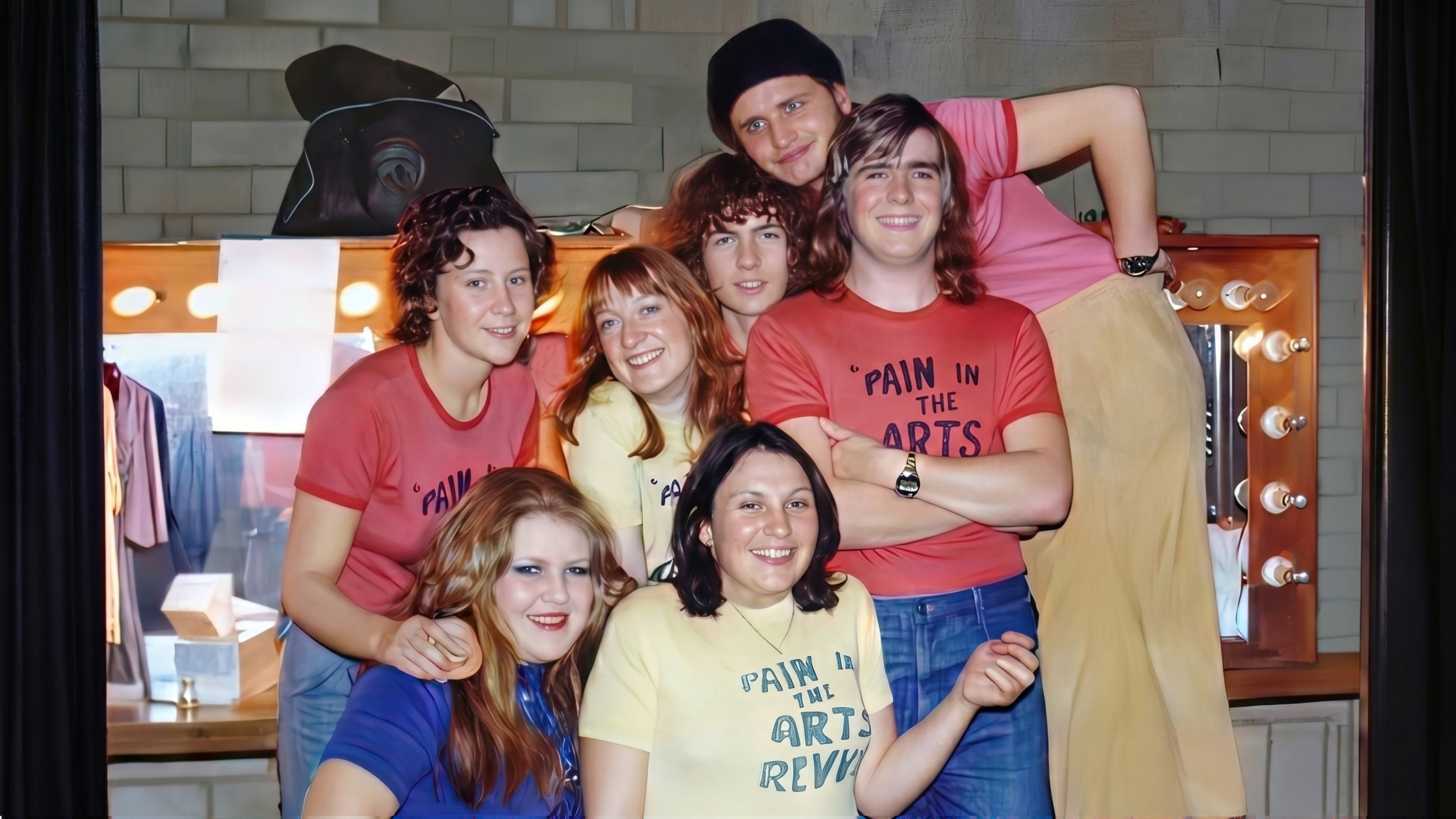
Lloyd Smith in red T-shirt, right of picture.
Why the initial fixation on comedy?
This needs an understanding of the impact that television was having on young people at the time. Colour TV was introduced to Australia in 1975. Monty Python and Aunty Jack had a huge influence on younger audiences. So, at a time when colour TV was still an expensive novelty for students, Lloyd Smith would host huge numbers in his small Chisholm College room to watch Monty Python each week on an 18 inch colour TV his father had given him as a birthday gift.
In the seventies, it was relatively straightforward to receive a student allowance, and the university through the Student Representative Council (SRC) would provide funding for clubs and societies. Students could apply for funding and receive financial support via this process. Many took advantage, and a variety of activities under the banner "Clubs and Societies", were seeded.
During that time, La Trobe student theatre was developing a brand in the development of original work. At one stage, Toad Players, another student group based in Menzies College featuring John Cheshire, attempted a Sci Fi Rock Musical, a highly ambitious undertaking.
Simon Pryor, a stalwart of the Melbourne University student theatre scene, was secretly employed by the Union to seed Thunderbolt Theatre as a new theatre company on campus more focussed on experimental theatre. It quickly took hold, broadening horizons and introducing new theatre methodologies. Among the first intake were James Wishart, Sebastian Harvey, Mike Lewis and two young female students, who would become key players in theatre at La Trobe for some years to come, Suzanne Kersten and Sue McClements.
Simon Pryor, a stalwart of the Melbourne University student theatre scene, was secretly employed by the Union to seed Thunderbolt Theatre as a new theatre company on campus more focussed on experimental theatre. It quickly took hold, broadening horizons and introducing new theatre methodologies. Among the first intake were James Wishart, Sebastian Harvey, Mike Lewis and two young female students, who would become key players in theatre at La Trobe for some years to come, Suzanne Kersten and Sue McClements.
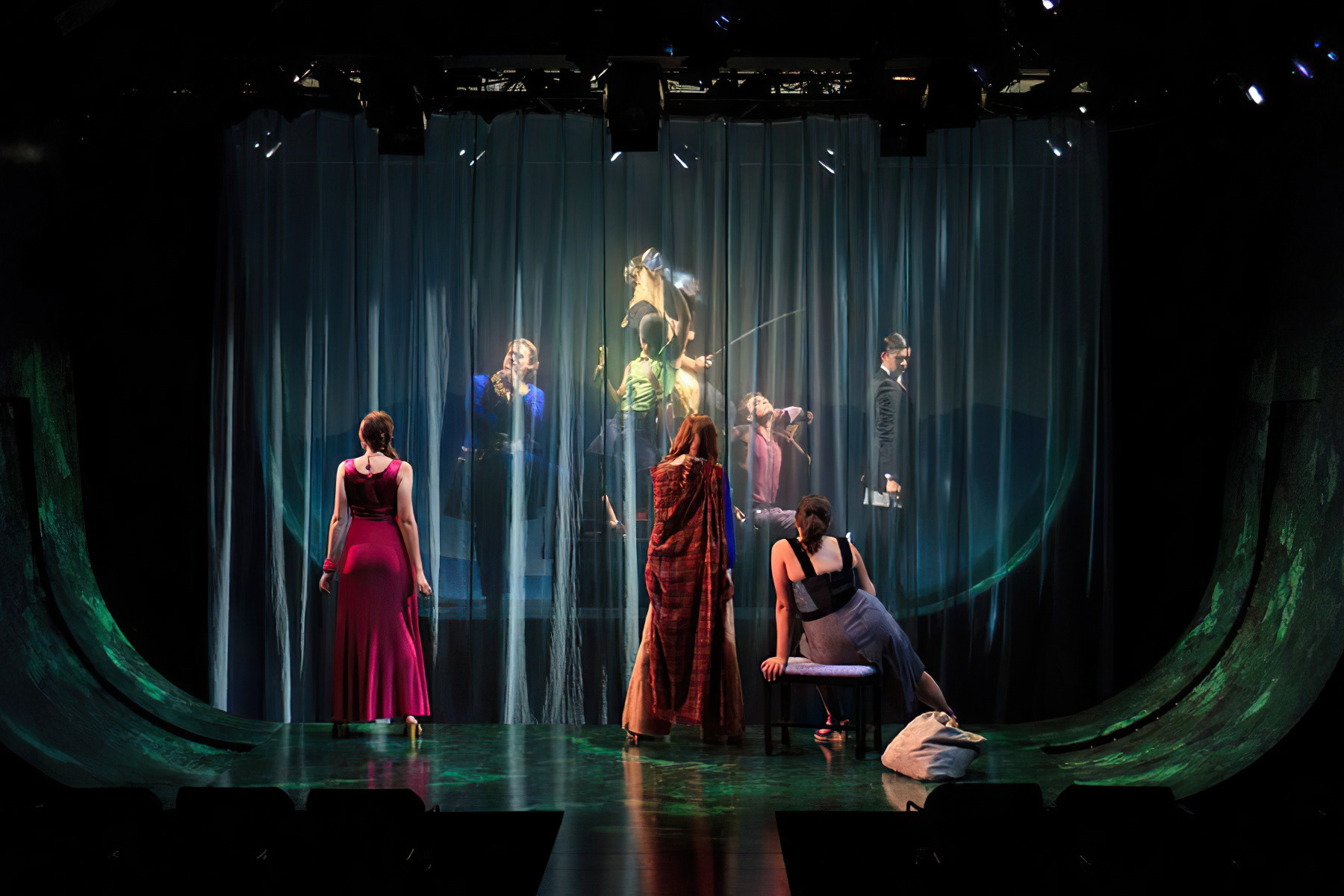
Experimental theatre production
Thunderbolt’s first production had been The Rock, a self-devised piece that Simon helped the cast develop from scratch. The revue, on the other hand had always been about original material. Sue and Suzanne, however, along with Glenn Filbin and Bev Nesbitt, showed just how powerful original theatre could be when based on personal experiences by bringing us a brilliant production called FourPlay. 1979, however, would turn out to be a particularly significant year in the further development of student theatre at La Trobe for a number of reasons. Mike Lewis, Christopher Brooking and Marg Dobson joined the company, as did many other talented students.
Not only would Thunderbolt change the variety of theatre at La Trobe in 1979, there were also changes afoot on the comedy side of things and on the Union Board when Union President and LUST director Rafik left uni. This began a partnership between Christopher Brooking and Mike Lewis that would eventually change the funding model for student theatre significantly. Both Chris and Mike joined the Union Board.Two things then happened that would have profound ramifications for the comedy side of things. Mike enlisted the help of Sue and Suzanne to democratise the revue, forsaking auditions and making it inclusive for all. This substantially increased the cast size but ultimately made for much better box office as well. This change, along with Chris’ penchant for publicity and pre-sales to residential colleges meant that revue audience sizes and revenue increased significantly. The comedy team also realised they could do more than one show per year and that material could be developed by improvisation rather than relying purely on script writers/performers.
Around this time, Mike and Chris also discovered by accident a new means of publicity for comedy on campus, a bogus lecture on Orientation Day that could recruit both comedy audiences and participants alike. Floated as an idea the night before Orientation Day as having potential for orientation the following year, Mike arrived on campus the next day only to find Chris had publicised it as happening that very day anyway! He had done so by approximating real academics’ names on handbills which advised students that missing this lecture would have profound ramifications for any first years that missed it. Said academics were soon outside the lecture theatre outraged, trying without success to keep students away. Once inside and realising it was a joke, a full lecture theatre of first years was soon laughing its head off. The next year, it came back bigger and better, renamed The Christopher Brooking Memorial Lecture as a form of revenge. At the Union’s annual request, it then ran each year for well over a decade. Comedy audiences don’t come much better than wide eyed first years.
Not only would Thunderbolt change the variety of theatre at La Trobe in 1979, there were also changes afoot on the comedy side of things and on the Union Board when Union President and LUST director Rafik left uni. This began a partnership between Christopher Brooking and Mike Lewis that would eventually change the funding model for student theatre significantly. Both Chris and Mike joined the Union Board.Two things then happened that would have profound ramifications for the comedy side of things. Mike enlisted the help of Sue and Suzanne to democratise the revue, forsaking auditions and making it inclusive for all. This substantially increased the cast size but ultimately made for much better box office as well. This change, along with Chris’ penchant for publicity and pre-sales to residential colleges meant that revue audience sizes and revenue increased significantly. The comedy team also realised they could do more than one show per year and that material could be developed by improvisation rather than relying purely on script writers/performers.
Around this time, Mike and Chris also discovered by accident a new means of publicity for comedy on campus, a bogus lecture on Orientation Day that could recruit both comedy audiences and participants alike. Floated as an idea the night before Orientation Day as having potential for orientation the following year, Mike arrived on campus the next day only to find Chris had publicised it as happening that very day anyway! He had done so by approximating real academics’ names on handbills which advised students that missing this lecture would have profound ramifications for any first years that missed it. Said academics were soon outside the lecture theatre outraged, trying without success to keep students away. Once inside and realising it was a joke, a full lecture theatre of first years was soon laughing its head off. The next year, it came back bigger and better, renamed The Christopher Brooking Memorial Lecture as a form of revenge. At the Union’s annual request, it then ran each year for well over a decade. Comedy audiences don’t come much better than wide eyed first years.
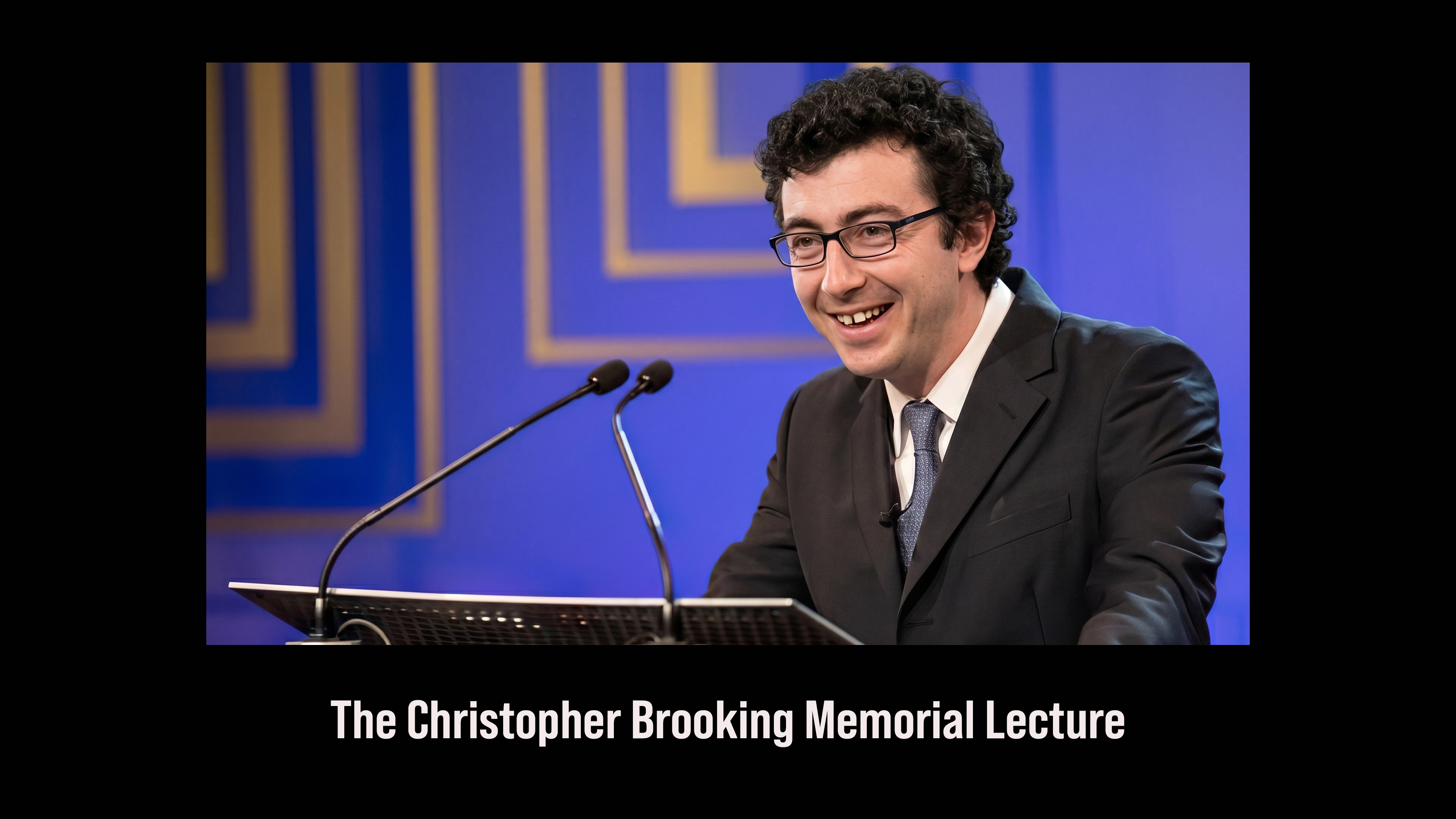
Comedy lecture on orientation day — a LUST student purports to be an academic lecturer
Also in 1979, the revue got some help from Cambridge University. Mike Hodd, a recent academic appointment to La Trobe, volunteered his services. Mike was a veteran of the Cambridge Footlights Revue, the troupe that famously spawned Monty Python. Naturally, we gratefully accepted his offer but he had to return to England while only half way through the process. Rob Wood, who would go on to become Union President, like Mike and Rafik, was a welcome addition to the cast. He would also feature strongly in the new IDS Drama Department’s productions.At this point, it must be said that student theatre could not have achieved what it was able to without the friendship and support of Mike Torney as manager of the Student Union. Not only did the Union provide space and equipment, it also helped by ensuring student theatre was able to broaden its horizons through the advent of Thunderbolt Theatre.

By Michael Lewis — 2026